Partners
Erasmus+ · Cooperation partnerships in vocational education and training (KA220-VET)

The PACS partnership
The organisations behind the project “Professionals in Action for Crisis Situations”
Project code: 2024-1-RO01-KA220-VET-000252081 | Implementation period: 01.11.2024 – 31.10.2026 (24 months)
4 participating organisations from Romania, Bulgaria and Hungary | 2 associated partners
An interdisciplinary and cross-sectoral partnership
The PACS project brought together complementary organisations from Romania, Bulgaria and Hungary – a sports organisation with a long tradition in applied training, a naval academy, an IT technical school and an association of persons with disabilities – with expertise in defence, national security, maritime safety, IT, civil protection, mountain rescue, first aid, survival techniques and applied sports.
Combining these competences made it possible to create a new interdisciplinary and cross-sectoral curricular model that did not previously exist within the partner organisations. Transnational cooperation generated benefits that no single institution could have achieved on its own: the complementary use of infrastructure and expertise, the removal of procedural and terminological barriers through joint exercises, the transfer of digital good practices, and stronger interoperability and cross-border professional networks.
participating organisations
countries: Romania, Bulgaria, Hungary
associated partners
Participating organisations
| Organisation | Role | Country | Type of organisation |
|---|---|---|---|
| Asociația Club Sportiv Eco-Alpin (CSEA) | Coordinator (beneficiary) | Romania | Non-governmental organisation |
| Nikola Vaptsarov Naval Academy (NVNA) | Partner | Bulgaria | Higher education institution |
| Miskolci SZC Kandó Kálmán Informatikai Technikum (Kandó) | Partner | Hungary | School / vocational education and training centre (secondary level) |
| Association for Persons with Physical Disabilities “Sf. Haralambie” (APDF) | Partner | Romania | Non-governmental organisation |
What each partner brought to the partnership
CSEA · Romania
The Mountain Training Centre and mountain training ground in Râșnov, over two decades of applied training activities and search-and-rescue experience.
NVNA · Bulgaria
The Maritime Rescue Centre, maritime and helicopter evacuation simulators, expertise in maritime safety and cadet training.
Kandó · Hungary
IT facilities and competences, experience in vocational education, civil protection and military cadet training.
APDF · Romania
Expertise in accessibility and the direct involvement of persons with disabilities, as experts and participants.
Coordinator · Romania
Asociația Club Sportiv Eco-Alpin (CSEA)
Râșnov, Romania · Non-governmental organisation · cabanahimalaya.ro
Asociația Club Sportiv Eco-Alpin has over two decades of applied training activities and survival camps and operates at the Mountain Training Centre in Râșnov. PACS was designed as an advanced continuation of the Erasmus+ project “Survival techniques and procedures for living in emergency situations” (2023-2-RO01-KA210-VET-000170137), implemented by the association: while that project targeted basic skills for the general public, PACS moved on to the structured training of trainers and specialists.
The CSEA team brought together ten experts with military, educational, aeronautical, IT, survival and search-and-rescue experience. As coordinator, the association ensured the overall management of the project and hosted most of the practical activities in Romania.
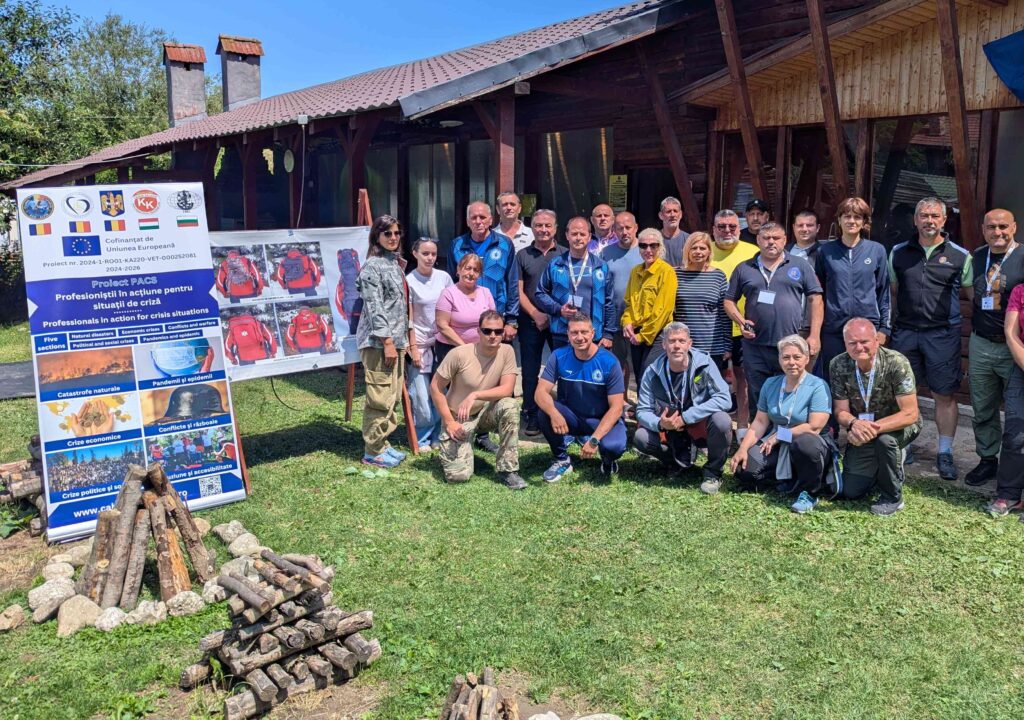
Participants in the pilot course, Mountain Training Centre, Râșnov.
experts in the Guide development team
participants in the pilot course in Râșnov
participants in the two simulation workshops
participants in the PACS final event
Contribution to the project
WP1 · Project management
Developed the Management Manual, reported to the National Agency, consolidated the partners' progress and budget reports and monitored financial execution and the eligibility of costs. Organised the opening conference (43 participants) and two transnational meetings in Râșnov, supervising the quality and accessibility of the deliverables.
WP2 · Integrated Course
Coordinated the questionnaire and the transnational needs analysis and played a central role in developing the course: rescue at height, earthquakes, evacuation and fires, drone search and rescue in mountain areas, wilderness survival and preparedness for epidemics and social, economic and political crises. Created the PACS online platform (not initially budgeted) and organised the pilot course, the workshop for persons with disabilities (together with APDF) and the two simulation workshops.
WP3 · Good Practice Guide
Coordinated the development methodology, the drafting and integration of content and the quality assurance of the Guide, designed the material and developed the sheets on environmental assessment, decision-making under stress, managing fear and panic, communication and coordination, leadership, resource management, cooperation with emergency services and post-crisis recovery. Organised the practical validation workshop for the sheets (September 2026).
WP4 · Masterclass and dissemination
Organised the PACS final event (Masterclass and closing conference, Râșnov, October 2026) and ensured that a team of trainers took part in all three events organised by the partners. The results were promoted on the CSEA website, which recorded over 14,300 visitors.
Partner · Bulgaria
Nikola Vaptsarov Naval Academy (NVNA)
Varna, Bulgaria · Higher education institution · naval-acad.bg
The Nikola Vaptsarov Naval Academy in Varna trains cadets, master's and doctoral students and has specialised infrastructure that is unique within the partnership: the Maritime Rescue Centre, training grounds and maritime and helicopter evacuation simulators. The PACS project complemented NVNA's initiative to create a training centre for ship survival in complex situations, making use of its maritime simulation infrastructure.
NVNA brought to the partnership its expertise in maritime safety, sea survival, ship and helicopter evacuation and national security, involving eight specialists – university lecturers, national security and maritime safety experts, practitioners and pedagogy specialists. The academy brought in the Civil Protection Department of Varna Municipality as an associated partner.
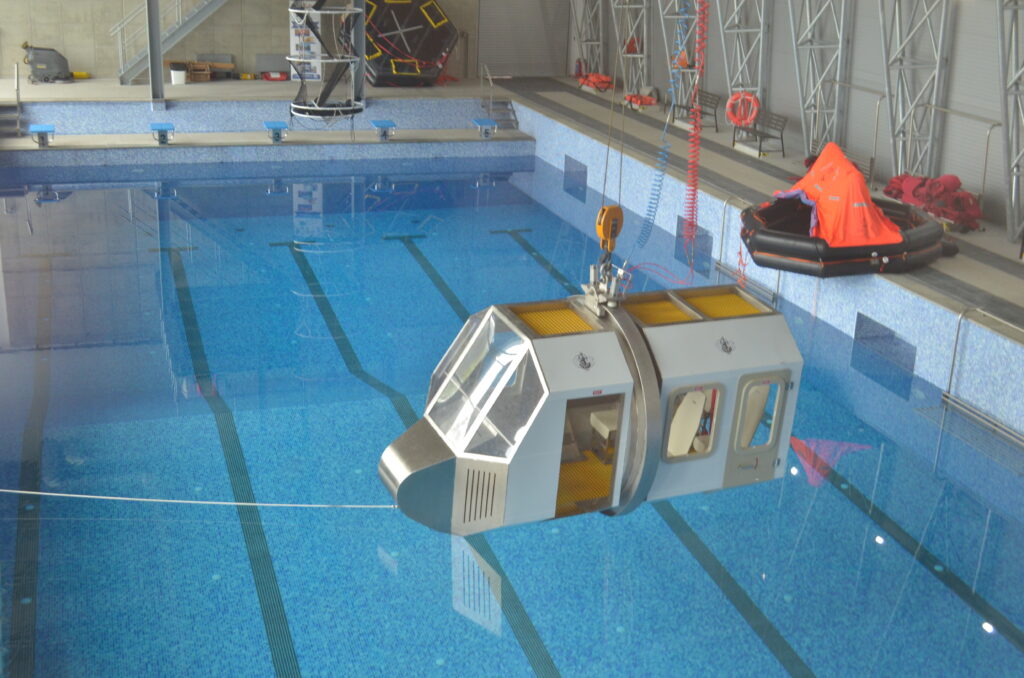
NVNA's helicopter evacuation simulator, used in the Training of Trainers.
respondents to the training needs analysis
participants in the Training of Trainers (ToT)
participants from 7 countries at Masterclass BG
people – estimated audience in Bulgaria
Contribution to the project
WP1 · Project management
Contributed to the Management Manual, the definition of indicators and monitoring, managed its budget and submitted periodic reports. Coordinated the safety protocols for high-risk activities and carried out the internal quality audit of the materials.
WP2 · Integrated Course
Coordinated the Methodology for Developing the Integrated Course (December 2024 – March 2025) and consolidated the final document. Provided specialised content for the modules on maritime safety, sea survival, diving, ship and helicopter evacuation, search and rescue, firefighting and the use of drones. Organised the Training of Trainers (ToT, April 2026, six days).
WP3 · Good Practice Guide
Provided the expertise for the sections on maritime crisis management, operational safety, sea survival, firefighting interventions and the use of drones in rescue operations. Tested the preliminary version of the Guide through focus groups with lecturers, master's and doctoral students and maritime professionals, using structured review grids and the editorial audit of its committee.
WP4 · Masterclass and dissemination
Organised Masterclass BG (March 2026), integrated into its annual national security conference, with participants from Bulgaria, Ukraine, Romania, Norway, Turkey, Switzerland and Germany. The results were disseminated scientifically through a paper presented at the International Conference on Black Sea Security – 2026, and NVNA made over 15 posts through institutional channels and the national and regional press.
Partner · Hungary
Miskolci SZC Kandó Kálmán Informatikai Technikum (Kandó)
Miskolc, Hungary · School / vocational education and training centre (secondary level) · kkszki.hu
The Kandó Kálmán IT technical school in Miskolc, part of the Miskolc Vocational Training Centre (Miskolci SZC), has experience in vocational education, IT and military cadet training, including Honvéd cadets. Within the partnership, Kandó contributed its IT facilities, digital competences and civil protection expertise, particularly for flood and fire interventions and the use of drones.
The Kandó team included five members involved in content development, coordination, translation, professional review and quality assurance, supported by specialists in fire and flood interventions. Kandó administered the partnership's shared working tools: the Google Drive shared space and the WhatsApp group.
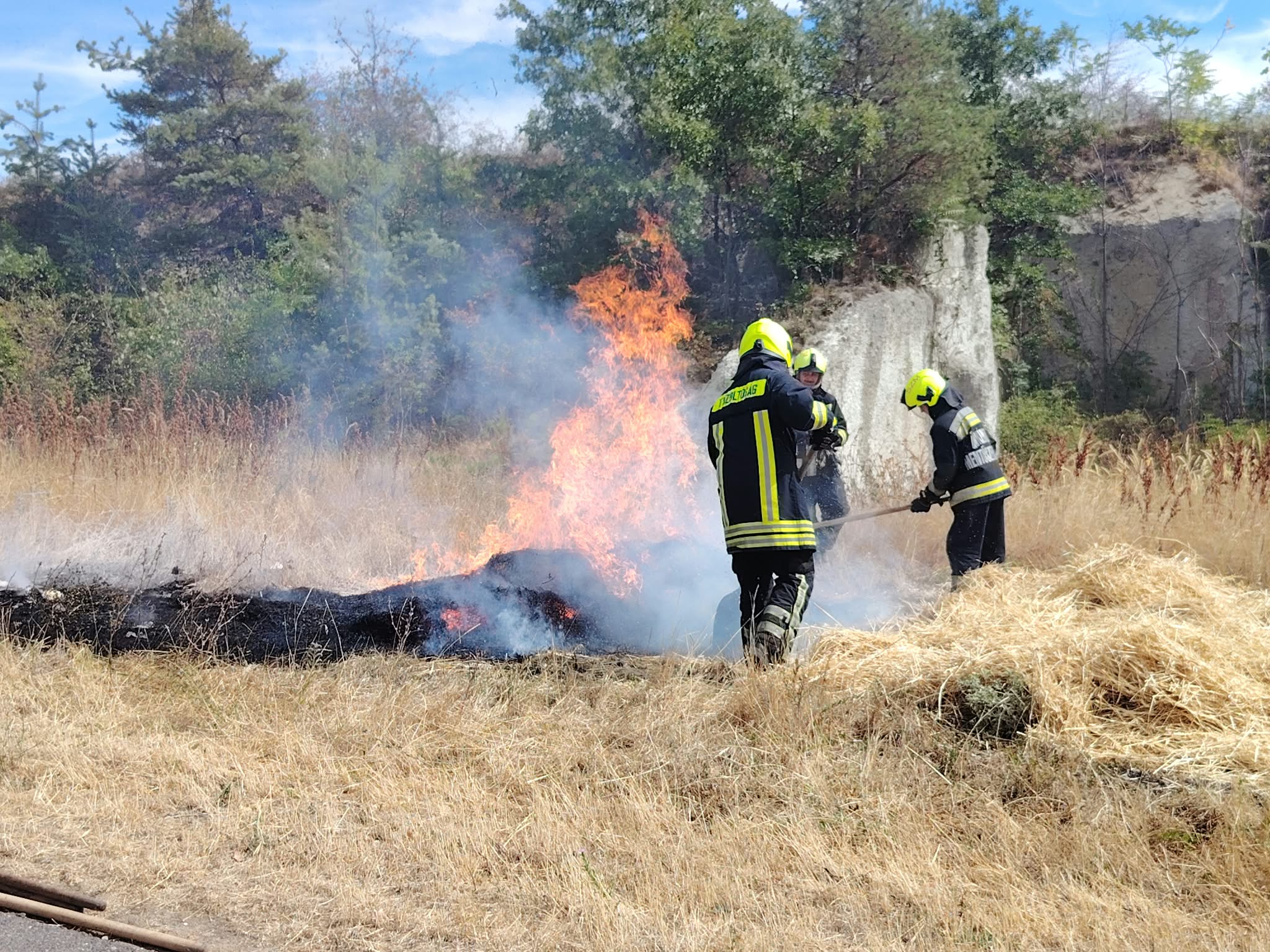
Practical firefighting exercise, Masterclass HU, Szomolya.
respondents to the training needs analysis
members of the Guide development team
participants in Masterclass HU
gave the Masterclass the highest rating
Contribution to the project
WP1 · Project management
Contributed to the Management Manual, supported the project launch, organised the transnational meeting in Miskolc (October 2025) and administered the shared Google Drive space and the WhatsApp group. Monitored its own deliverables and ensured financial records and reporting.
WP2 · Integrated Course
Contributed to the methodology and syllabus and to the content on flood and fire interventions, the use of drones to assess crisis situations and the digital competences needed for online communication and coordination in emergencies. Kandó representatives took part in the Training of Trainers and the pilot course.
WP3 · Good Practice Guide
Developed and integrated professional and educational materials on the use of UAVs/drones and the management of situations caused by fires and floods. Two experts checked the content on fires and floods, including procedures and safety aspects, and the materials on drones were aligned with the structure of the Guide and the Integrated Course. The Miskolc Masterclass contributed to the educational video on firefighting.
WP4 · Masterclass and dissemination
Organised Masterclass HU (Miskolc – Szomolya, August 2026), with a predominantly practical approach focused on the integrated management of crisis situations, especially forest fires, with the participation of the Szomolya Volunteer Firefighters Association. The results were promoted on the school's website and networks.
Partner · Romania
Association for Persons with Physical Disabilities “Sf. Haralambie” (APDF)
Romania · Non-governmental organisation · apdfbrasov.ro
APDF represents the community of persons with physical disabilities and brought to the partnership its expertise in accessibility and the direct perspective of those most vulnerable in crisis situations – a group often overlooked in emergency preparedness programmes. Through APDF, persons with disabilities were involved in the project as experts and as participants, not only as beneficiaries.
The APDF team included a person with disabilities and a social worker experienced in supporting persons with disabilities. APDF's contribution is reflected in the separate module dedicated to persons with disabilities – which extended the structure of the Integrated Course from five to six modules – and in the dedicated sheets of the Guide.
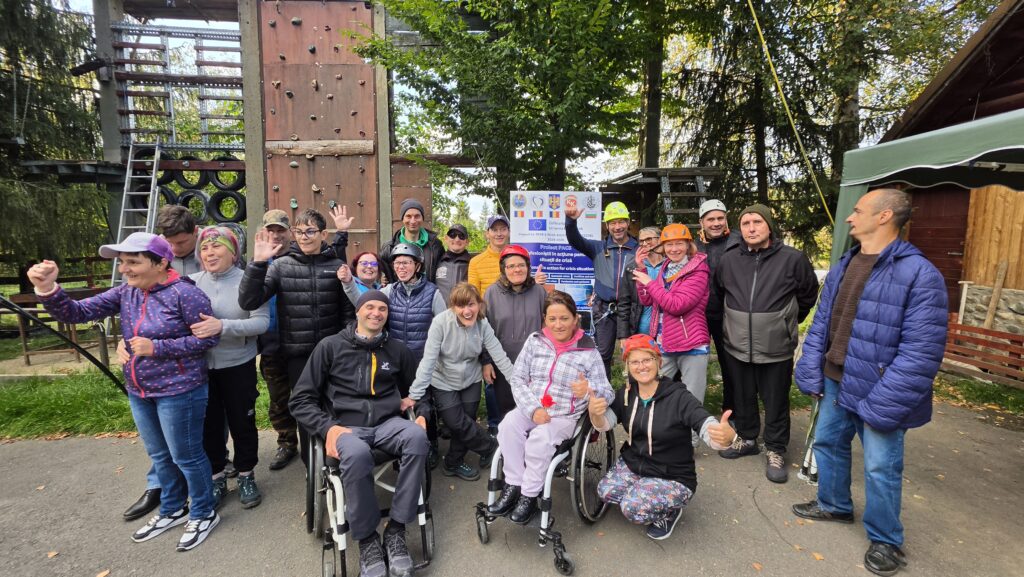
The Masterclass organised by APDF for the community of persons with disabilities, Râșnov.
respondents to the training needs analysis
persons with disabilities and companions at the Oct. 2025 workshop
participants in Masterclass RO
of respondents would recommend the workshop
Contribution to the project
WP1 · Project management
Adapted the activities for persons with disabilities, managed its budget and submitted the required reports. Took part in the project launch, the pilot course and the final event.
WP2 · Integrated Course
Contributed to adapting the course by identifying specific risk situations and formulating adapted evacuation, rescue, transport and communication measures. Together with CSEA, organised in Râșnov (October 2025) the practical workshop on intervention and rescue adapted to persons with disabilities in the event of earthquakes and fires.
WP3 · Good Practice Guide
Contributed to the sheets dedicated to adapting interventions and recommendations for persons with disabilities: specific needs, accessible communication, assisted evacuation and appropriate support in crisis situations.
WP4 · Masterclass and dissemination
Organised Masterclass RO (Râșnov, September 2026) for the community of persons with disabilities: a single integrated scenario, from aerial observation and radio communications to the search for a person missing in the forest, with over 70% of the time devoted to practical activities. 85% of respondents said the activities helped them a lot or very much to know how to act in emergencies.
Associated partners
In addition to the formally participating organisations, two associated partners were involved in the project, bringing valuable operational and institutional expertise and strengthening the link between education, field practitioners and public authorities.
Associated partner · Romania
Romanian Reserve Officers Association (AORR), Bucharest
Foreseen from the application stage and coordinated in its relationship with the partnership by CSEA, AORR played an active role both in substantiating and developing the deliverables and in the training, testing and dissemination activities. AORR specialists supported data collection for the needs analysis, provided specialist advice for the Integrated Course and the Guide, and gave rigorous feedback during the review stages.
AORR representatives took part in all training and testing activities organised in Romania – the pilot course in Râșnov, the simulation workshops and the final event – and supported the dissemination of the results among the association's members and the military reservist community.
Associated partner · Bulgaria
Civil Protection Department of Varna Municipality
Brought in during implementation through NVNA, the Civil Protection Department of Varna City Hall strengthened the link between academia and the public authorities responsible for emergency management in the Black Sea region.
Representatives of the local administration and civil protection structures took part in the training activities, Masterclass BG and the project presentation meetings, contributing to the exchange of good practices, the alignment of training scenarios with real intervention requirements and the institutional visibility of the project.
How the cooperation worked
Partnership management was based on the Management Manual and the detailed implementation plan, which set out the stages, responsibilities and deadlines for each work package and deliverable. Progress was tracked by the team of 6 people in charge, through periodic partner reports, meetings and evaluation questionnaires.
Communication took place in English throughout, combining digital tools with face-to-face meetings: the Google Drive shared space and the WhatsApp group administered by Kandó, e-mail, Microsoft Teams and Zoom. Three transnational meetings were held – two organised by CSEA in Râșnov, at the start and end of the project, and one organised by Kandó in Miskolc, before the interim report – complemented by online meetings.
The main strength of the cooperation was the genuine complementarity of the partners' expertise: mountain rescue and survival, maritime safety, IT and digital technologies, fire and flood interventions, the use of drones and the inclusion of persons with disabilities. Differences in experience, infrastructure and organisational culture were overcome through constant dialogue, joint needs analysis and consultations between teams.
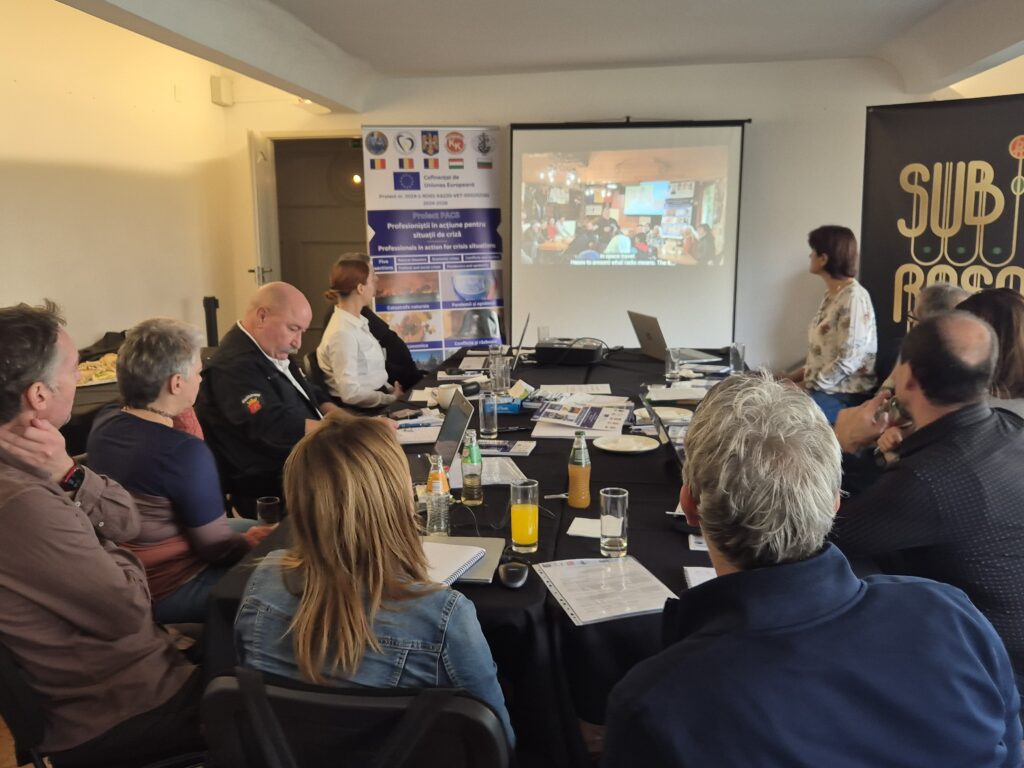
The transnational meeting in Miskolc, October 2025.
Good practices developed together
The project consolidated a civil-military (CIMIC) and cross-sectoral cooperation model, harmonising terminology and working procedures between non-governmental organisations, military academic institutions, technical schools, volunteer firefighters, mountain rescuers and local public authorities. The complementary use of the partners' infrastructure – NVNA's maritime and helicopter evacuation simulators, CSEA's mountain training centre, Kandó's IT facilities – together with APDF's accessibility expertise increased the operational capacity of the teams and strengthened the link between education, NGOs, military reservists and local civil protection authorities.
Erasmus+ project “Professionals in Action for Crisis Situations – PACS”, no. 2024-1-RO01-KA220-VET-000252081, co-funded by the European Union.
Funded by the European Union. Views and opinions expressed are however those of the author(s) only and do not necessarily reflect those of the European Union or the National Agency for Community Programmes in the Field of Education and Vocational Training (ANPCDEFP). Neither the European Union nor ANPCDEFP can be held responsible for them.